

My Home for the Next 5 Months
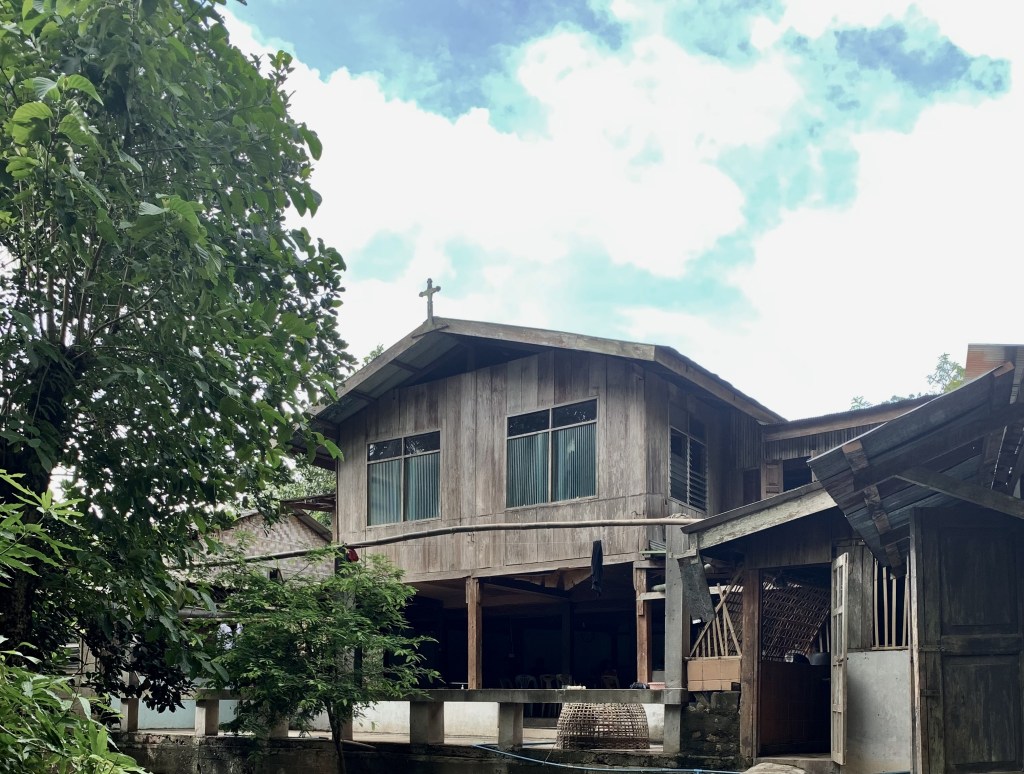
Into the Jungle
At Chiang Mai’s Arcade station I watch as a van destined for Pai pulls away from the curb every half an hour. Having arrived at 8:30am it is now 9:30am and my van to Mae Hong Son is set to leave in an hours time. While I wait, I eat street food from a local vendor, stretch, and put away litre upon litre of water in the unfamiliar heat. By the time I reach my final destination I will have completed Chögyam Trungpa’s Shambhala: The Sacred Path of the Warrior, but progress slows when a guy around my age wearing a backwards cap, clubmaster glasses, and a beach tee inquires of the book.
“What are you reading?” he asks in a classically direct American tone of voice.
I brush off my annoyance, not allowing this opportunity to share about my current reading material pass me by.
“Here, take a look”.
“Sham-bah-la…what’s it like?”, he inquires, genuinely curious “It looks like something I would read”.
“Hm”, I hummed aloud. Only one name entered my mind, but I wasn’t sure if it would be well received. Heeding to Trungpa’s call to fearlessness I replied with an only slightly vague question of my own “It reminds me of 12 Rules. Do you know it?” preparing to change the subject.
“12 Rules for Life by Jordan Peterson?”
“That’s the one.”
He grinned sympathetically, “Yes, I’ve read it. In fact, I saw Peterson speak live in Nashville a few summers ago. He speaks eloquently. I’ve heard that every night of his tour is something new.”
“Amazing, yes I’ve heard that as well. Peterson has to be one of the greatest intellectuals of our generation.”
“Yes, I think so.” Layton spoke in a causally corrective tone.
My brow furrowed slightly “I think so too”, I said it didn’t I, of course I think so.
I wouldn’t allow this contest of masculinity take away from our connection and we congenially share our travel details. Layton is on the first leg of a cross Asia tour – Nepal, India, and Vietnam were on the road ahead. Our respective vans leave the station at the same time, and before we depart I made my way over to near where his van was parked. We shook hands and wished each other well.
Wellness was in need – the road we were set to travel had to be among some of the most treacherous in this hemisphere. As I got into the van the driver offers me a seat near to the front. “My lucky day” I think. An instant later my joy is dashed as the other farang (foreigner) apologetically claims that he had pre-selected that seat in his booking. Pushed to the back of the bus my seat was overtop of the wheel well – I prepared for a rough ride. My only relief was that I was seated next to two monks.
I desperately try to read and successfully manage to complete Shambhala between bouts of motion sickness. The road weaves around cliffs, mountains, and valleys in the dense Thai jungle. It is so windy, in fact, that a concave mirror is posted at the point of intersection of each corner exceeding 90 degrees so that the driver can briefly observe the road ahead. When the road ahead is clear the curved yellow line is swallowed up under the front of van. Even so, I feel safe – it reminds me of how my dad used to drive the high-beam lit roads between Vernon and Kamloops in the British Columbia interior.

In transit we stop at one rest area, two military checkpoints, and multiple drop off zones for our most precious cargo – the men and women on board. One drop off is made for the other farang, an unnamed American who lent me 20 baht at the rest area so that I could pay the bathroom cover (the least he could do for taking his seat right out from under me). He is dropped off at the gate of a forest monastery. Upon reaching Mae Hong Son, as if on cue, a tuk-tuk driver awaits me at the station. As the motorized vehicle putters along I look deep into in the tree covered hills of Northern Thailand. The landscape reminds me of the backdrop of one of my favourite films: Tropic Thunder. Fortunately, I am not lost.
Motivations
My whole life has led up to this moment (how could it not, I made this decision on my own as a living example of all that I knew and has learned). I neared the end of my undergrad with no job in site and suddenly the opportunity appeared. Fortunately, is fits well into my career map, and with my own house in relative order I feel that I can meaningfully give back to humanity. In discussion with my CAPI supervisor Robyn Fila, a professor in the Global Developments department at UVic, she promised that the type of experience that I would have during six months in the Thai jungle was the type of experience I had sought after when I went abroad in my gap year some five years ago. During that trip, I paid to volunteer, went into debt, got addicted to nicotine, but all in all truly loved my time in Fiji and Peru despite my discontents. However, this trip abroad would be different. Equipped with an undergraduate degree, a desire to learn, a desire to earn, and a belief in the power of delayed gratification, KSDC caught my eye. Yet, nothing could prepare me for what I was soon to experience.
War in the Karenni State
Within a week a 20 year old student and amateur football player Kae Kaw Reh (pronounced closer to Gae Gaw Reh) tells me with tears in his eyes that Thailand is “not home”. Thailand is no more than a “temporary camp”; most Karenni refugees believe that “home”, a place to call their own, lies to the west beyond the Thai-Burmese borderline .
Unlike Thailand, the topic of my previous blog post, Burma gained independence following the 1947 departure of the British. Around 1875, the date of Karenni unification, it was recognized that, what would be called the Karenni State was neither Burmese nor British. The Karenni and their king, were a distinct people under a distinct rule. The British left Burma following WWII and the Karenni people were given ten years to decide if they wished to join the Burmese state. In 1959 they agreed, but three years later a military coup threw the country into uncertainty and brought the ruthless Burmese military to power. In the 1980s, after a wave of pro-democracy sentiment and protests within Burma and the Karenni state, the government crackdown accelerated. Since that time 9 refugee camps – home to approximately 90,000 people – have been established on the Thai side of the border. One of these camps is commonly known as camp 1 where approximately 8,500 Karenni refugees live to this day. Ethnic minorities in Burma and the Burmese people continue to struggle under the boot of military dictatorship.
Not far from camp 1, 30 minutes west of KSDC, the Karenni Army (KA) is at war. A mostly defensive war the KA protect those who are pushed into hiding near to their capital, Laikow. In my personal studies, I am reading a historical drama about one of the most infamous indigenous warriors, and folk legend, Tecumseh. It tells the story of the American-Indian wars of late 18th-early 19th century eastern North America. I haven’t finished the book yet, and while I would not claim to be an ardent student of history, I live in 2022 so I know where the indigenous story rests. Optimistically speaking, we can suppose that the current post-colonial world is moving in the opposite direction. Like most nation states, Burma, wants to be accepted in the international order – an important condition of economic development. The Karenni Army may only have access to single shot rifles, but there is a considerable amount of international pressure placed on the junta, who in general, want their military state to develop even if they are being influenced by their greed.
My weapon in the fight against the Burmese is education. Education for educations sake leads to a higher quality of life, yet education for the sake of throwing off the chains of a power hungry military dictatorship in the name of nation building carries some extra weight. Founded in 2002 by graduates of the Earthrights School in the Mekong District, Burma, the Karenni Social Development Centre teaches the next generation of Karenni leaders in human rights, law, democratic processes, the english language, and environmental protection. The school is located near to Thailand’s Ban Nay Soy in a small village, Dokita, home to most Karenni refugees with a disability.
Day in the Life and Philosophical Musings
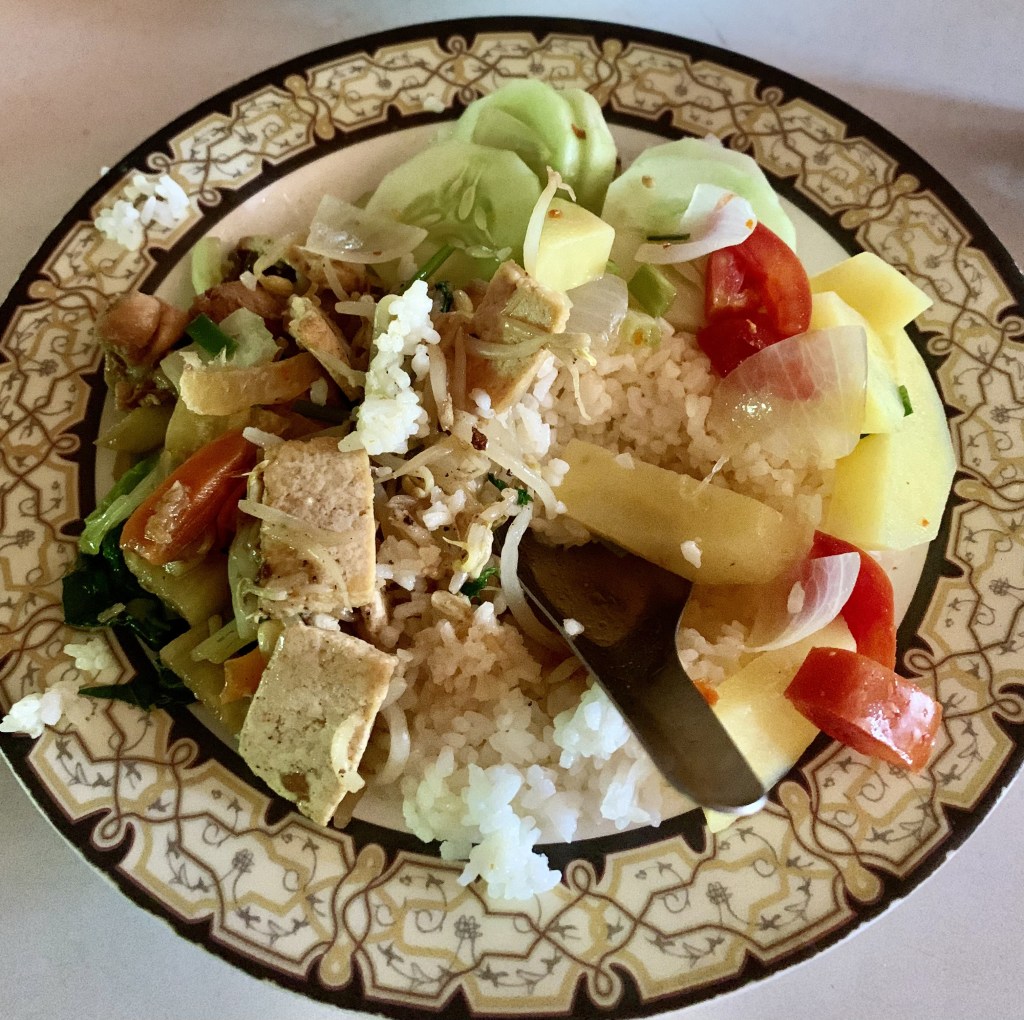
The call and response rooster crows begins thirty minutes before the sun rises. Thankfully, ear plugs, and a blanket over my head, allow me to sleep until around 6:30am when the light, the noise, and the heat become unbearable. After a run or a yoga practice, the first of the three student-cooked meals is served, usually consisting of a salad, a soup or curry carrying the protein choice of the day (chicken, fish and tofu are the popular choices), and a pan cooked veggie dish, all served with a hefty serving of rice; the food at KSDC is some of the tastiest, simple food I have ever eaten. Thankfully, the intense exercise regimes consisting of football and volleyball will prevent me from coming home rounder then when I left.
The class time is different everyday. My earliest class is 9am and the latest is at 2:00pm. Usually, there are at least a few hours in the day in which I can pursue my personal studies that inform my teaching and my future. As of late, my thoughts and writings have been influenced by Allan W. Eckert’s historical epic on the life of Tecumseh. This leader never shied away from speaking his mind, most notably speaking against the tradition of enemy torture in the Shawnee nation. His outspoken courage produces a feeling of promise in the value of speaking openly and honestly from out of ones conscience. As he did so Tecumseh made mistakes as one does when they speaks alone, yet he recognized that the greatest communication error in the face of moral uncertainty is silence and indecision; often it is better to speak and risk being wrong, than to go along with a crowd headed for disaster. Do not take this as an endorsement of loudly proclaiming everything that enters the mind – discretion is a sign of maturity – but one lesson I have learned from Tecumseh is to speak up when my gut tells me something is wrong.
During my time here I am prepared to make mistakes, especially when I use my platform to touch on sensitive topics. I dread the possibility of being out of touch with the reality on the ground, so I listen more than I speak. Most of these students have the desire to behave valiantly in respect of their shared Karenni heritage, and I hope that I am able to facilitate conversations that strengthen their resolve. More importantly, my role is to have them to continue to think about the english language, a weapon that when fine tuned has the potential to assist their relatively unknown ethnic group to gain the international recognition they want and need.
Living Up to What is Expected
Gratitude is the least of what I feel as we conclude the fourth week of classes. The welcoming attitude is overwhelming at times, but always appreciated. Sometimes the hospitality nears on servitude, where in almost every case that I insist that I will do something on my own I am often politely told to step back into my lane and allow a student to take care of said household duty. It’s not as if I don’t wash my own dishes or clean up on occasion – most often when the most nurturing of the students are out of the kitchen duty – but there is sense that it is not my responsibility as Teacher.
Strongly influenced by both Buddhism and Confucianism many Asian cultures insist that one should unbegrudgingly perform one’s specific place in society to the best of one’s ability. I have decided to lean into my role as teacher and perform my role as expected thus respecting myself and the community at large. These obligations provide me with the encouragement I need to perform: to my colleagues and students, to the Karenni people, to the parent organization that I am working with, CAPI, the scholarship that is funding me, Queen Elizabeth Scholars, and, last, but certainly not least, the people back home who are a well of support.
In the words of Trungpa: “…[W]e should regard ourselves as being burdened; we have the burden of helping the world. We cannot forget this responsibility to others. But if we take our borden as a delight, we can actually liberate this world. The way to begin is [by] being open and honest with ourselves…so we can work with rest of the world, on the basis of the goodness we discover in ourselves.”
For more information on any of the topics looked at in this please reach me at rowanfroese@gmail.com. For more information on KSDC you can find them on Youtube at https://www.youtube.com/channel/UCwxBdlJG8EYUbMmLy2WsQxg, on Facebook at https://www.facebook.com/KarenniSDC, or at their website http://karennisdc.org/.
 Becoming Superhuman
Leave a comment